
Introduction
The word narcissist has become extremely common in everyday conversations, especially when describing someone who appears selfish, arrogant, or overly focused on themselves. However, in psychology, narcissism is far more complex than simple self-centered behavior. Many people use the term loosely without understanding its actual clinical meaning, which often leads to confusion and mislabeling.

Psychologists describe narcissism as existing on a spectrum. On one end, people may display mild narcissistic traits such as confidence, ambition, or a desire for recognition, qualities that can be relatively normal in healthy personalities. On the other end of the spectrum lies Narcissistic Personality Disorder (NPD), a diagnosable mental health condition. According to the Diagnostic and Statistical Manual of Mental Disorders (DSM-5), an individual must show at least five persistent symptoms related to grandiosity, need for admiration, and lack of empathy for a clinical diagnosis.
This article explores the 12 commonly cited traits of a narcissist, helping readers understand how these behaviors appear in real-life interactions while also connecting them to established psychological concepts. It is important to remember that displaying a few narcissistic traits does not automatically mean someone has a personality disorder. Only qualified mental health professionals can make a formal diagnosis.
Origin of the 12-Trait Model
The framework describing 12 narcissistic traits is based largely on clinical observations made by psychologists and mental health professionals studying patterns of narcissistic behavior. Over time, researchers noticed recurring attitudes and behaviors among individuals who displayed strong narcissistic tendencies. These observations helped shape practical checklists that make it easier to recognize narcissistic patterns in everyday relationships.
Although the 12-trait model is not an official diagnostic tool, many of its elements closely align with the criteria outlined in the Diagnostic and Statistical Manual of Mental Disorders (DSM-5) for Narcissistic Personality Disorder. Traits such as grandiosity, entitlement, lack of empathy, and a strong need for admiration appear both in the DSM-5 criteria and in the expanded 12-trait framework.
Psychological resources and mental health platforms have expanded these clinical ideas into everyday recognition tools, allowing people to better understand behaviors that may indicate narcissistic tendencies. In this way, psychological checklists help translate complex clinical concepts into patterns that are easier to identify in social and interpersonal contexts.
Three Core Trait Categories
To better understand narcissistic behavior, the 12 traits can generally be grouped into three psychological categories:
- Self-image traits: These relate to how narcissistic individuals view themselves, often involving inflated self-importance, fantasies of success, and exaggerated achievements.
- Interpersonal relationship traits: These include behaviors that affect relationships, such as exploitation, lack of empathy, and entitlement.
- Social and behavioral traits: These involve outward behaviors like arrogance, power-seeking, and constant demands for admiration.
The 12 Traits of a Narcissist
1. Grandiose Self-Importance
One of the most recognizable traits of narcissism is grandiose self-importance, where individuals develop an exaggerated perception of their abilities, achievements, or value. They may present themselves as exceptionally talented, intelligent, or influential, even when objective evidence does not support these claims. This inflated self-view often serves as a psychological shield protecting fragile self-esteem.
A strong sense of superiority accompanies this trait. Narcissistic individuals may believe they deserve more respect, recognition, or authority than others simply because they view themselves as inherently special. Conversations may frequently shift toward their accomplishments, real or imagined.
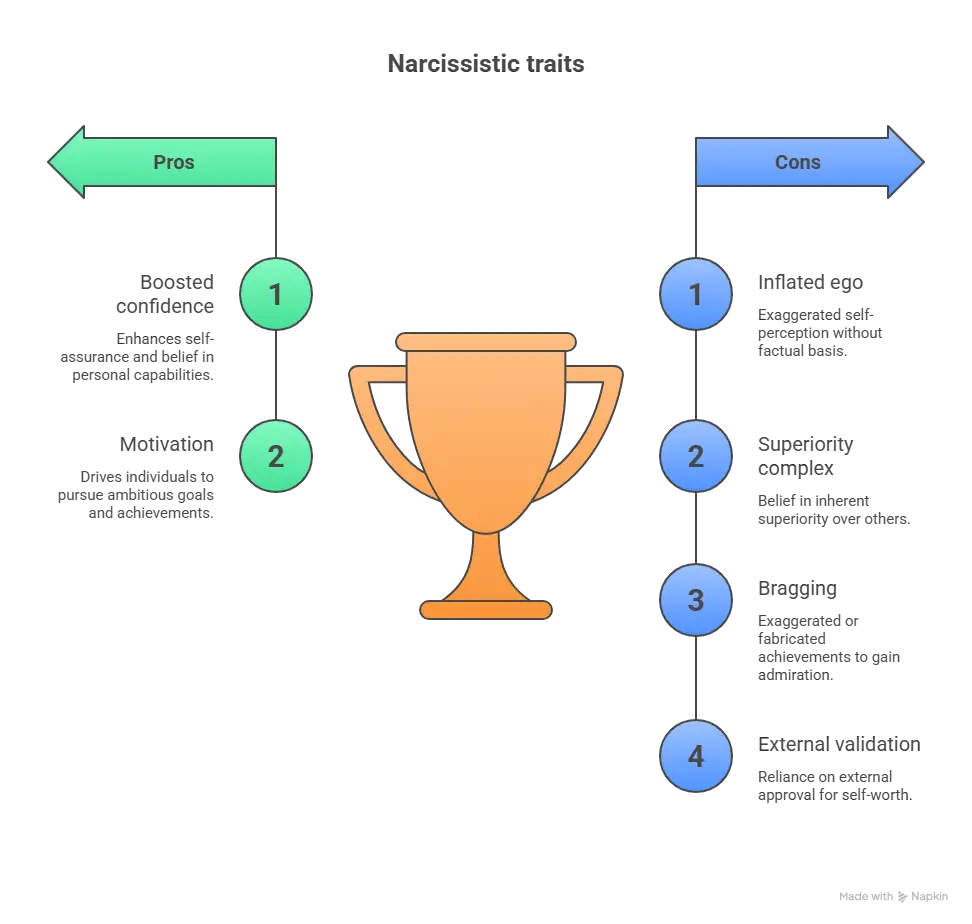
This often leads to bragging without evidence, where achievements are exaggerated or fabricated to gain admiration. While confidence is healthy, grandiosity differs because it depends heavily on external validation rather than realistic self-assessment.
2. Preoccupation With Success, Power, or Wealth
Fantasies of unlimited success, influence, beauty, and wealth frequently consume narcissistic personalities. These imagined futures help sustain their idealized self-image and reinforce beliefs about personal greatness.
Such fantasies can create a detachment from reality, where expectations become unrealistic or disconnected from actual effort or circumstances. Instead of focusing on gradual growth, individuals may believe success is inevitable because of their perceived superiority.
This mindset often produces status-focused thinking, where social standing, prestige, and recognition become primary measures of self-worth. Relationships, careers, and decisions may revolve around appearing successful rather than achieving genuine fulfillment.
3. Selective Associations
Another common trait involves selective associations, meaning narcissistic individuals prefer relationships that enhance their status or self-image. They may actively seek connections with people perceived as powerful, attractive, or influential.
At the same time, they may display a tendency toward viewing others as inferior, dismissing individuals who do not meet their standards of success or prestige. This hierarchical view of relationships can limit authentic emotional connections.
This behavior creates a form of social filtering, where friendships and professional interactions are evaluated based on personal benefit rather than mutual respect or emotional closeness.
4. Constant Need for Admiration
A defining feature of narcissism is a constant need for admiration. Praise and attention act as emotional fuel, helping maintain self-esteem that may otherwise feel unstable.
This results in strong dependence on praise, where compliments and recognition are actively sought through achievements, appearance, or social behavior. Without consistent validation, narcissistic individuals may feel unappreciated or resentful.
Their actions often reflect validation-seeking behavior, such as dominating conversations, highlighting accomplishments, or posting attention-seeking content. Beneath this pattern lies fragile self-esteem, which relies heavily on external approval rather than internal confidence.
5. Sense of Entitlement
Narcissistic individuals frequently display a strong sense of entitlement, believing they deserve special treatment regardless of circumstances. Rules that apply to others may feel unfair when applied to them.
They may expect automatic compliance with their wishes, assuming others should prioritize their needs without question. When expectations are not met, frustration or anger can emerge quickly.
A key component is the lack of reciprocity. While expecting loyalty, attention, or favors, they may struggle to provide the same level of consideration in return, creating an imbalance in relationships.
6. Unrealistic Expectations of Others
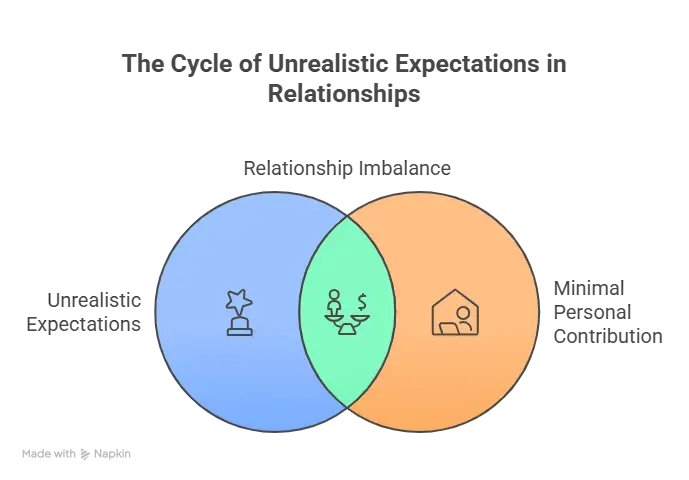
Narcissistic personalities often place unrealistic expectations on people around them. Partners, friends, or coworkers may be expected to meet exceptionally high standards or fulfill emotional needs perfectly.
This includes demanding perfection while overlooking their own limitations or mistakes. Criticism toward others may be frequent, whereas self-criticism remains minimal.
Despite high expectations, there may be minimal personal contribution, leading to unequal effort in relationships or teamwork. Over time, this creates a relationship imbalance, where others feel pressured, undervalued, or emotionally exhausted.
7. Exploitation of Others
Exploitation is another central narcissistic trait, involving manipulation for personal gain. Relationships may be approached strategically rather than emotionally, focusing on benefits such as status, resources, or admiration.
This behavior often reflects emotional disregard, where the feelings or well-being of others receive little consideration if they interfere with personal goals.
As a result, interactions may become transactional relationships, maintained only while they provide an advantage or validation. Once usefulness declines, emotional distance or disengagement may follow.
8. Lack of Empathy
A significant psychological marker of narcissism is a lack of empathy, or difficulty genuinely understanding and responding to others’ emotional experiences.
Individuals may show difficulty recognizing emotions, especially when others express vulnerability or distress. While they may intellectually understand emotions, emotional resonance is often limited.
This creates an emotional disconnect that can make partners or friends feel unseen or invalidated. Over time, the impact on relationships becomes substantial, as empathy is essential for trust, intimacy, and emotional support.
9. Expectation of Praise for Minimal Effort
Narcissistic individuals may expect recognition even when effort or achievement is limited. This reflects inflated self-recognition, where ordinary actions are viewed as exceptional.
They may anticipate rewards, compliments, or acknowledgment disproportionate to actual contribution, demonstrating disproportionate reward expectations. When praise is absent, feelings of resentment or unfair treatment may arise.
This pattern reinforces dependence on external validation rather than intrinsic motivation.
10. Power-Seeking Behavior
Many narcissistic traits revolve around maintaining control and influence. Power-seeking behavior reflects a strong desire for dominance within social or professional environments.
This may appear as attempts to maintain control in conversations or relationships, interrupting others, steering decisions, or asserting authority unnecessarily.
11. Envy and Projection
Narcissistic individuals may experience intense envy toward others’ success, particularly when someone else receives admiration or recognition they desire.
At the same time, they may cope by assuming others are jealous of them, a psychological projection that protects their self-image from perceived threats.
This can lead to belittling achievements, minimizing others’ accomplishments to restore feelings of superiority, or reducing internal insecurity.
12. Arrogance and Superiority
The final trait involves outward expressions of arrogance and superiority. Communication may become condescending, dismissive, or patronizing toward others.
Such individuals often display condescending communication, speaking in ways that imply intellectual or social dominance.
They may also show dismissive attitudes, disregarding opinions or experiences that challenge their worldview. Underlying these behaviors is an inflated sense of self-value, reinforcing the belief that they are fundamentally more important than others.
How the 12 Traits Overlap With DSM-5 Criteria
How the 12 Traits of Narcissism Overlap With DSM-5 Criteria
The 12 traits of narcissism discussed earlier closely align with the diagnostic framework outlined in the Diagnostic and Statistical Manual of Mental Disorders (DSM-5) for Narcissistic Personality Disorder (NPD). While the DSM-5 formally lists nine diagnostic characteristics, many of the commonly recognized traits in everyday psychology reflect the same underlying patterns.
Several shared elements appear in both frameworks. For example, grandiosity is central to narcissism, reflected in exaggerated self-importance and fantasies of success. Similarly, a persistent need for admiration and validation appears in both the clinical criteria and the expanded trait list. Entitlement, or the expectation of special treatment, also overlaps strongly with DSM-5 descriptions.
Other shared features include exploitation of others, where individuals manipulate relationships for personal gain, and a lack of empathy, which limits the ability to understand or care about others’ emotional needs. The DSM-5 also highlights envy, either toward others’ success or the belief that others are jealous, as well as arrogant attitudes and behaviors, both of which are reflected in the 12-trait model.
The key difference lies in clinical versus observational use. The 12-trait framework helps people recognize narcissistic behaviors in everyday interactions, while the DSM-5 criteria are used by mental health professionals for diagnosis. Importantly, these traits must be persistent, pervasive, and cause significant impairment in functioning before they qualify as a personality disorder.
When Do Narcissistic Traits Become a Disorder?
Diagnostic Requirements
Not everyone who displays narcissistic behaviors has Narcissistic Personality Disorder. In clinical psychology, traits only become a disorder when they meet specific diagnostic standards. According to the DSM-5, narcissistic patterns must be pervasive, meaning they appear consistently across different situations such as relationships, work environments, and social interactions.
Another key factor is the presence of a long-term behavioral pattern. Personality disorders typically begin in early adulthood and remain relatively stable over time rather than appearing temporarily during stressful periods.
Finally, the traits must lead to functional impairment. This means they significantly disrupt a person’s relationships, work life, or overall psychological well-being. Without these elements, narcissistic behaviors may simply reflect personality tendencies rather than a clinical disorder.
Prevalence and Demographics
Research estimates that Narcissistic Personality Disorder affects approximately 0.5% to 5% of the population. Studies also suggest that the condition appears more frequently in males than females, although narcissistic traits can be found in individuals of any gender.
Why Recognizing Narcissistic Traits Matters
Understanding narcissistic traits is important for both psychological awareness and healthier relationships. When these patterns go unrecognized, they can create confusion, emotional stress, and repeated interpersonal conflict. Recognizing behaviors such as lack of empathy, manipulation, or entitlement can help individuals set clearer boundaries and better understand difficult relationship dynamics.
Awareness also helps prevent casual or inaccurate labeling. In modern discussions, the term “narcissist” is often used loosely to describe anyone who appears self-centered. However, narcissistic traits exist on a spectrum, and not everyone displaying such behaviors has a diagnosable disorder.
For this reason, it is essential to remember that a professional evaluation is necessary for diagnosis. Mental health professionals use structured criteria and careful assessment to determine whether a pattern of behavior truly reflects Narcissistic Personality Disorder.
Conclusion
Narcissism is a complex psychological concept that extends beyond everyday self-confidence or ambition. The 12 traits of a narcissist provide a helpful framework for recognizing patterns such as grandiosity, entitlement, lack of empathy, and a strong need for admiration. These behaviors often overlap with the diagnostic criteria outlined in the DSM-5 for Narcissistic Personality Disorder.
However, it is important to remember that narcissistic traits exist on a spectrum. Displaying a few of these characteristics does not necessarily mean someone has a personality disorder. Clinical diagnosis requires persistent patterns that significantly impair relationships and functioning.
By understanding these traits more clearly, readers can develop greater psychological awareness and approach discussions about narcissism with accuracy and responsibility rather than quick labels or assumptions.
Frequently Asked Questions (FAQ)
Are narcissistic traits the same as narcissistic personality disorder?
No. Narcissistic traits and Narcissistic Personality Disorder (NPD) are not the same. Many individuals may occasionally show behaviors such as seeking admiration or feeling proud of their achievements. However, NPD is a clinical diagnosis defined in the DSM-5, requiring a persistent pattern of grandiosity, need for admiration, and lack of empathy that significantly interferes with daily functioning.
Can someone have narcissistic traits without having NPD?
Yes. Narcissism exists on a psychological spectrum. Some individuals may display certain narcissistic tendencies, such as confidence, competitiveness, or occasional self-centeredness, without meeting the full diagnostic criteria for a personality disorder. These traits only become clinically significant when they are extreme, persistent, and harmful to relationships or functioning.
How many traits are required for diagnosis?
According to the DSM-5, a diagnosis of Narcissistic Personality Disorder requires at least five out of nine specific symptoms. These symptoms must be present consistently across various contexts and cause noticeable impairment in relationships, work, or personal well-being.
Are narcissists aware of their behavior?
Awareness can vary. Some individuals with narcissistic traits may recognize certain behaviors but may not see them as problematic. Others may lack insight into how their actions affect people around them. Because narcissistic self-perception is often tied to maintaining a positive self-image, acknowledging harmful behavior can be psychologically difficult.