
Emotional Burnout, early signs, and recovery tips before it gets worse
Introduction
Do you feel mentally exhausted even after resting for enough time? You sleep better, take work breaks, and even try to relax, but the tiredness is not going away. That’s the point where emotional burnout begins. Emotional burnout is becoming a more common thing in today’s world. Constant work pressure, studies, and even social expectations slowly drain our energy. At some point, our minds stop keeping up.
If you are in such a situation, you’re not alone. Many people experience signs of emotional burnout without even realizing the signs.
What Is Emotional Burnout?
Emotional burnout is a state of complete exhaustion. It affects both our mental and emotional capabilities. It’s not just feelings of stress; it happens when stress goes on too long without proper rest. Stress usually disappears after taking enough rest. But burnout is different. The exhaustion stays, even when things slow down. The work pressure, emotional overload, and stressful situations lead to emotional burnout. Gradually, it leaves you feeling disconnected, tired, and unmotivated.
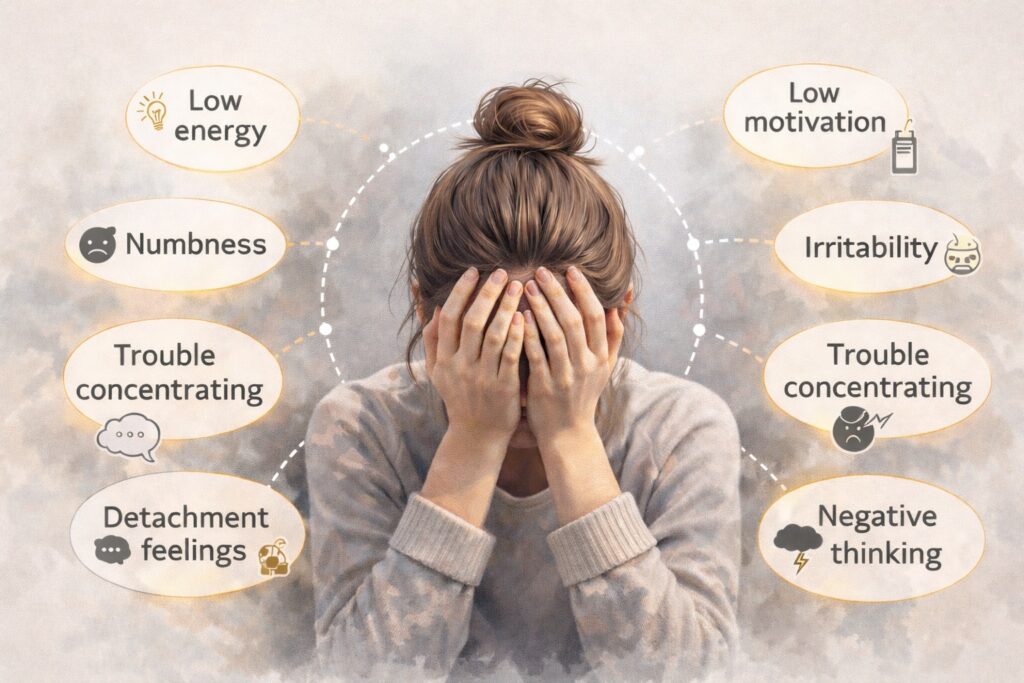
10 Signs of Emotional Burnout
We, as human beings, have a deep emotional connection with the world. Sometimes, these emotional connections boost our expectations. If the expectations are not met, it causes emotional burnout. Today, we are going to find the 10 common signs of emotional burnout.
1. Constant fatigue and low energy
When you feel tired some of the time, even after resting. It’s not just physical tiredness; your mind may be drained too, like you don’t have the energy to deal with even small tasks.
2. Feeling emotionally numb
Usually, a person stops reacting the way they used to. Things that once boost the emotions of happiness, sadness, and excitement. Such emotions didn’t arise anymore. It feels like our emotions have gone quiet.
3. Increased irritability
Small things become annoying and irritable over time. Individuals develop feelings of frustration, impatience, and easy burnout. Small things become irritable that were normal before.
4. Trouble concentrating
Our focus becomes weaker. Initially, we find it difficult to stay on a task. Moreover, we start to forget things easily and feel mentally foggy throughout the day.
5. Sleep problems
Sleep problems are one of the main signs of emotional burnout. Burnout can affect our sleep in different ways. We might struggle to fall asleep, wake up often, and feel tired even after a full night’s sleep.
6. Detachment feelings
When emotions become burst, we may start pulling away from people. Conversations feel like a huge effort, and close relationships feel distant and less meaningful.
7. Negative thinkings
In emotional burnout, we develop irrational thoughts. We might expect worst scenarios, doubt our capabilities, and feel like we lose our inner happiness. Sometimes, we imagine the worst conditions and lose hope for improvements.
8. Physical symptoms
Emotional burnout doesn’t just affect our minds. It can show up in our bodies as well. through headaches, muscle tensions, and feelings of heaviness. Burnout can be shown in our emotional reactions.
9. Loss of interest in things we once enjoyed
Emotional burnout reduces our interest in activities that once made us feel good. We may stop doing them altogether because they just don’t feel worth it anymore.
10. Loss of motivation
Individuals find simple tasks heavy. They know what they need to do, but just can’t find the drive to start. And sometimes lose the basic motivation to do daily tasks.
The causes of emotional burnout
Work overload
When you start putting too much efforts to complete a task, your energy starts to run out. Long working hours, constant deadlines, and no breaks can slowly drain both your mind and body. At first, you push through it, but over time, it becomes exhausting and overwhelming.
Lack of control
Burnout often grows when you lack decision-making in your life. When ever its your career, your job decisions, or family matters, not having control over decisions can make you feel stuck and emotionally burst. For that, we need to become good decision makers.
Emotional pressure
Emotional attachments also cause burnout. Dealing with constant emotional stress exhausts our energies. This may come from toxic relationships, personal struggles, and always trying to stay stronger in emotional breakdowns. Sometimes, caring too much emotions insight can eventually become overwhelming.
Work-life imbalances
When the work responsibilities take over our entire day. Then there is no space left for personal life. It also disturbs our sleep and rest patterns. We need emotional connections to overcome our work pressure. These connections might be our family, friend circles, and marital relationships. We all need those connections to recover from our work pressure with quality time with friends and family.
Excessive social expectations
We as individuals living in a society, either in an individualistic or a collectivistic society. While living in a culture, people show some expectations for us to obey. When the expectations exceed their limits, they can quietly wear us down. The pressure to succeed, to be perfect, to obey social norms, and to face failure sometimes makes it difficult to try something new. Such social expectations can draw us towards emotional bursts.
How to recover from emotional burnout
You don’t need to fix everything at once; recovery is the gradual process of healing. When it comes to emotional recovery, we need to follow some steps to reach emotional regulation. Below, we have highlighted some recovery strategies.
Proper rest
To avoid emotional burnout, the first step is to set a specific time for rest. The rest doesn’t mean just sleep. Here, the rest refers to stepping away from stress as well. Allowing your mind some pauses and not feeling guilty for unknown stressors. Our body and mind need some pauses and good sleep for good emotional regulation.
Boundaries
Always saying yes to others can also lead to emotional burnout. Sometimes saying “No” becomes very essential for saving our time and energy. Protecting our time and energy is really important. Saying no doesn’t mean you become a selfish person, but you can’t say yes to everybody.
Self-care
There should not be any compromise when it comes to self-care. Self-care means giving importance to yourself. Always try to praise yourself for milestone achievements. Keep a positive perspective towards your own personality, and try to adopt a positive attitude and behavioral patterns. Listen to music, spend time in nature, and perform activities that make you happy.
Talk to someone trusted
Emotions become more destructive when they keep adding. Keeping our emotions inside makes burnout heavier. It’s necessary to release our emotions through talking. When we share our problems with a friend or a family member, our frustrations start to decrease.
Reduce overloads
Responsibilities sometimes make us irritable. If possible, try to lower your unnecessary responsibilities. We are programmed to perform a specific task at the moment. Multitasking usually makes us confused as it demands more energy and focus.
Mindfulness techniques.
Deep breathing, yoga, physical exercises, and spending quiet time for a while make you feel relieved. It brings our attention back, increases our focus, and makes us feel satisfied.
Recovery matters for emotional burnout
Ignoring emotional burnout can make it worse over time. It can affect our health, relationships, and daily activities. Recovery is really essential for regaining our energy, making calm decisions, and thinking more clearly. Moreover, emotional recovery makes us feel happier and deeply motivated. With small changes, we can make these recoveries.
When should you seek help?
Sometimes burnout goes beyond our control and affects our daily functioning.
When you realize constant exhaustion, emotionally draining situations, and hopelessness, it might be time to reach out for help. Whenever your thoughts become too heavy to control, energy isn’t restored even after a rest; it’s a sign you shouldn’t ignore.
The root cause of emotional burnout can’t be addressed by ourselves. For that, we need professional help from a psychiatrist. Having someone listen, understand, and guide you can make things feel a little lighter.
Conclusion
Emotions affect our lives completely. When these emotions become out of control, they cause emotional burnout. We usually show emotional bursts when things are not going well. Emotional burnout is real, and it happens to more people than we think.
We can’t fix everything at once. Recovery starts with small acts. Giving ourselves a little rest, self-care, valuing our own space and time, limiting our responsibilities, and, more importantly, sharing our issues with someone trusted, we can control our emotional burnout.


Pingback: Psychological facts about love and happiness. - Daily psychological facts